The Route of the Camellia in the Lourizán Botanical Garden


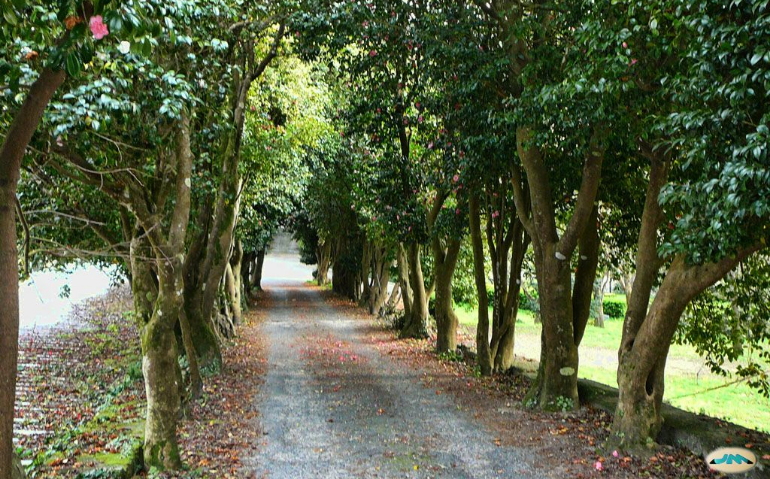
The Lourizán Forest Research Center Botanical Garden (CIF Lourizán) is included in the itinerary of the Camellia Route.
Camellias were introduced into Europe from the East by Portuguese navigators, and Galicia emerged as one of the first European regions to welcome them. Since the beginning of the 19th century, these flowers have beautified numerous prominent gardens in Galicia.
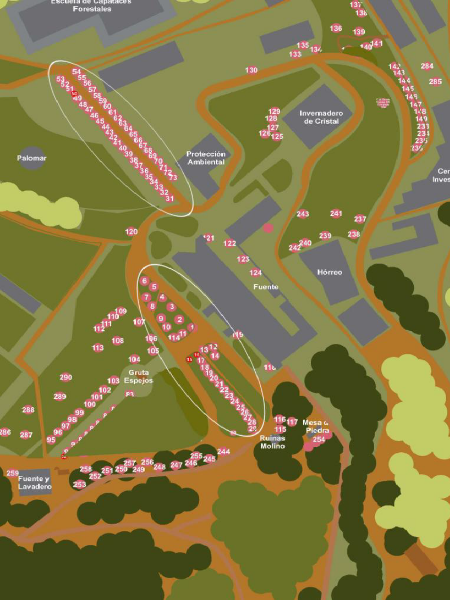
The camellia gardens at CIF Lourizán were developed in several phases throughout the 19th and 20th centuries, preserving the original structure from their years of greatest splendor (Fernández Soler, 1887). Near the Manor House (see sketch), the planting of these exotic shrubs was organized, defining areas designated for walks and paths. It is estimated that although some magnolias and camelias near the Manor House were planted between 1840 and 1850. The majority came from the Practical School of Agriculture of la Caeira, established in Pontevedra in 1873, which offered in its catalog 139 varieties of camellia. Likewise, other plants from the same era came from French and Portuguese nurseries, including the Horticultural Establishment of José Marqués Loureiro and Costa & Costa Nursery, both in Porto, thanks to the intermediation of the said School. During the 20th century, the camellia collection expanded, extending its presence beyond the initial landscaped areas, even reaching more distant areas of the manor. In 2023, the property was transferred from the Province of Pontevedra to the Xunta de Galicia.
What is most striking about this garden is that it hosts the oldest specimens of Camellia japonica on the Camellia Route, as well as the world's tallest camellia specimen, with three trunks, reaching twenty and a half meters in height, two meters taller than the second tallest, located in China.